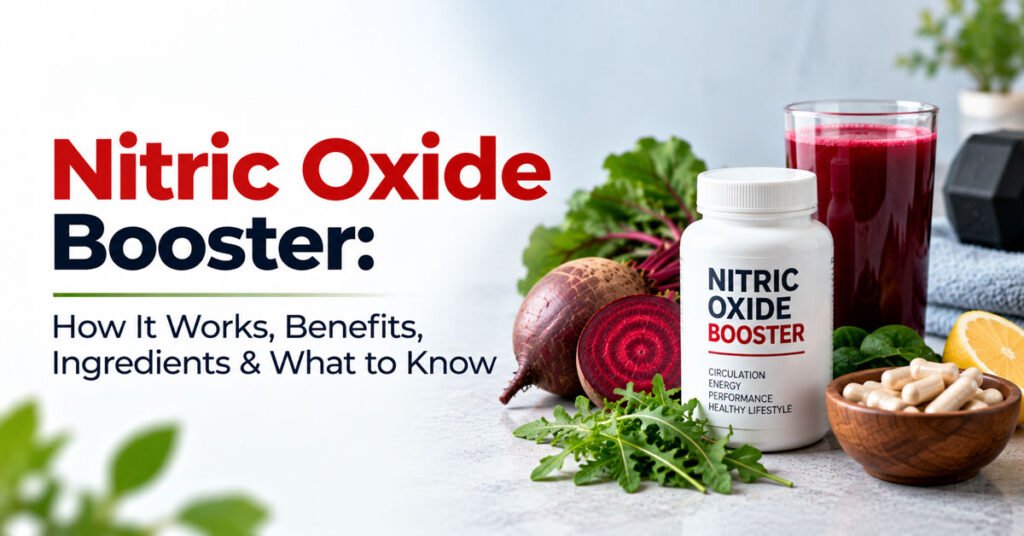
Nitric oxide booster supplements have become popular among people looking to support circulation, exercise performance, and healthy blood-vessel function. But what actually makes these products work? The answer depends on the ingredients, how nitric oxide is produced in the body, and what you expect from the supplement.Nitric oxide (NO) is a naturally occurring signaling molecule involved in blood-vessel relaxation, circulation, muscle function, and other physiological processes. Your body produces it on its own, but nutrition and lifestyle can influence the pathways involved in nitric oxide availability.
A good nitric oxide strategy is about supporting normal nitric oxide production rather than trying to force nitric oxide levels as high as possible.
What Is a Nitric Oxide Booster?
A nitric oxide booster is generally a dietary supplement designed to provide ingredients that support the body’s nitric oxide pathways. These products are commonly marketed toward athletes, active adults, and people interested in circulation and cardiovascular wellness.
There is no single standard formula for these supplements. Some contain L-citrulline or L-arginine, while others use beetroot or concentrated dietary nitrate. Some formulas combine several ingredients along with vitamins and minerals.
This makes reading the Supplement Facts label important. Two products can both be called nitric oxide boosters while having very different ingredients, amounts, and expected effects.
How Does Nitric Oxide Work in the Body?
Your body produces nitric oxide through several pathways. One important pathway uses enzymes called nitric oxide synthases, which convert L-arginine into nitric oxide.
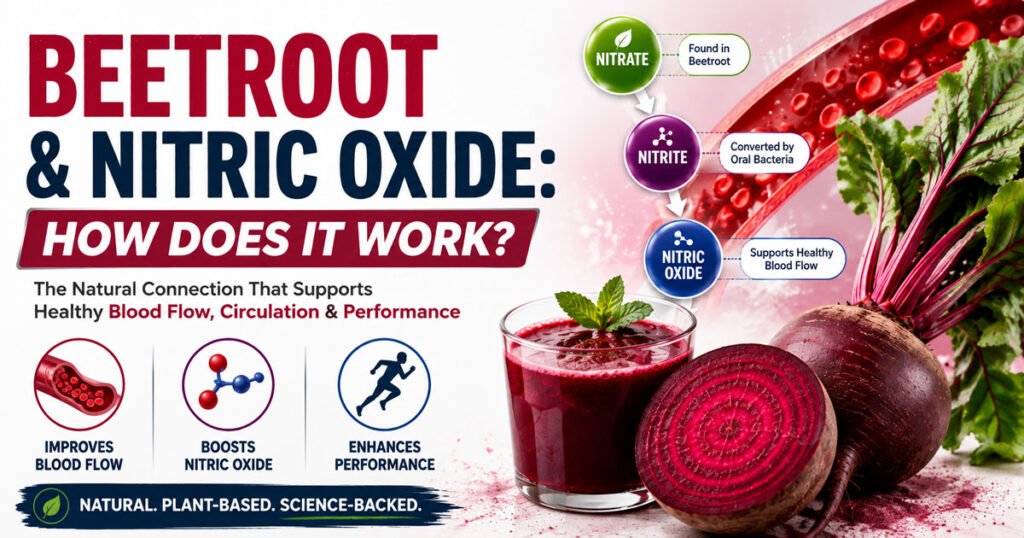
There is also a dietary nitrate pathway. Nitrate found naturally in foods such as leafy greens and beetroot can be converted into nitrite, partly through bacteria in the mouth. Nitrite can then contribute to nitric oxide production under suitable conditions.
Once produced, nitric oxide can signal nearby smooth muscle cells to relax. In blood vessels, this contributes to vasodilation, helping regulate blood flow.
Nitric oxide is therefore better understood as a signaling molecule than as a simple “energy” ingredient.
Why Do People Use Nitric Oxide Boosters?
People use nitric oxide supplements for different reasons. Athletes may be interested in exercise performance and the feeling of increased blood flow during training. Others are more interested in general circulation or supporting cardiovascular wellness.
The scientific evidence varies depending on the ingredient and the outcome being studied. For example, dietary nitrate has been researched extensively in exercise settings, while L-citrulline has been investigated for its effects on circulating arginine and vascular function.
That distinction matters because evidence for an ingredient does not automatically prove that every supplement containing that ingredient will produce the same result.
Potential Benefits of Nitric Oxide Boosters
The potential benefits depend largely on the ingredients, dose, and individual response. Some areas have received more research than others.
| Potential Area | Why Nitric Oxide May Matter | Evidence Considerations |
|---|---|---|
| Blood flow | NO helps regulate blood-vessel relaxation | Strong physiological basis |
| Exercise performance | May influence blood flow and exercise efficiency | Results vary by exercise type |
| Muscle pump | Vasodilation can contribute to temporary muscle fullness | Depends on formula and workout |
| Cardiovascular function | NO participates in vascular regulation | Overall lifestyle remains important |
| Sexual function | NO is involved in normal blood-flow signaling | Not a treatment for erectile dysfunction |
These potential benefits should not be interpreted as guarantees, particularly when a supplement contains multiple ingredients that have not been studied together.
L-Citrulline: A Popular Nitric Oxide Ingredient
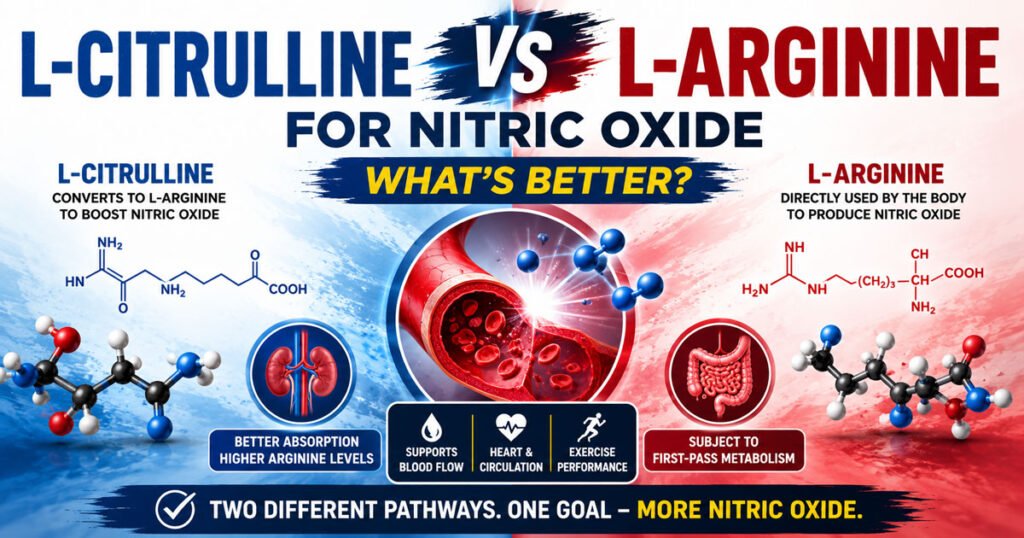
L-citrulline is one of the most common ingredients found in nitric oxide formulas. It is an amino acid that can be converted by the body into L-arginine, which is involved in the nitric oxide synthase pathway.
One reason citrulline receives attention is that oral L-citrulline can raise circulating arginine levels. Compared with taking L-arginine directly, citrulline follows a different metabolic route and is less extensively broken down during its initial passage through the digestive system and liver.
Research has examined L-citrulline in areas including exercise performance and vascular health. However, results are not uniform, and the outcome can depend on the population, dose, duration, and type of exercise being studied.
L-Arginine: Another Common Ingredient
L-arginine is the direct substrate used by nitric oxide synthase to produce nitric oxide. This makes it a logical ingredient for nitric oxide formulas.
However, taking arginine orally does not mean all of it becomes nitric oxide. A substantial amount is metabolized before reaching the bloodstream, which is one reason researchers have investigated L-citrulline as an alternative way to increase circulating arginine.
Both ingredients have been studied in clinical and exercise research. The results vary, so it is better to look at the specific evidence for the ingredient and intended use rather than assuming that more arginine automatically means more nitric oxide.
Beetroot and Dietary Nitrate
Beetroot is another major ingredient in nitric oxide supplements. Its appeal comes from its naturally occurring nitrate content.
Dietary nitrate can enter the nitrate-nitrite-nitric oxide pathway. Beetroot juice has been extensively studied in exercise research, with some studies reporting improvements in certain measures of endurance or exercise efficiency.
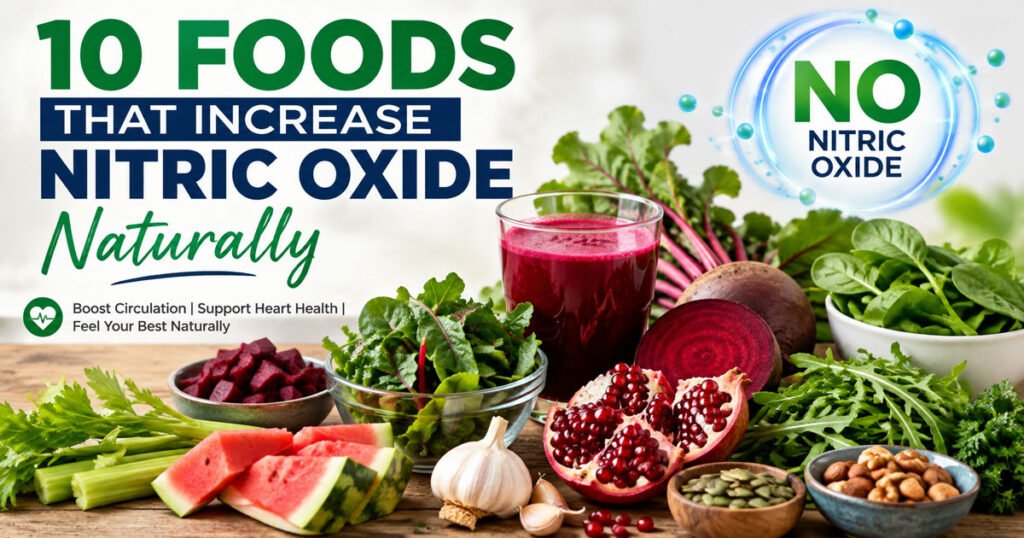
Leafy vegetables such as arugula and spinach are also important dietary nitrate sources. This means you can obtain nitrate from ordinary foods rather than relying entirely on supplements.
When evaluating a beetroot supplement, look beyond the word “beetroot” and check whether the product provides meaningful information about the amount and form of the ingredient.
Other Ingredients You May See
Nitric oxide formulas sometimes include ingredients that are not direct nitric oxide precursors but may support broader nutritional or vascular functions.
- Vitamin C: An antioxidant nutrient involved in normal cellular function.
- Magnesium: An essential mineral involved in hundreds of biochemical reactions.
- Hawthorn: A botanical ingredient that has been studied for cardiovascular-related uses.
- Vitamin B12: Supports normal red blood cell formation and nervous system function.
- Other plant extracts: Some formulas include additional botanical ingredients based on the manufacturer’s formulation.
The presence of an ingredient does not automatically establish that the finished product will produce a particular health outcome. Dosage, formulation, quality, and individual circumstances all matter.
How to Choose a Nitric Oxide Booster
With so many products available, the label is one of the best places to start. Look for transparent ingredient information rather than relying entirely on marketing language.
| What to Check | Why It Matters |
|---|---|
| Ingredient amounts | Helps you understand what you are actually consuming |
| Serving size | Shows how much product provides the listed ingredients |
| Full ingredient list | Helps identify additional ingredients and allergens |
| Manufacturer information | Makes the product easier to evaluate |
| Usage directions | Helps you follow the intended serving instructions |
| Health claims | Exaggerated promises should be treated cautiously |
Be cautious of products promising instant, dramatic, or guaranteed changes in circulation, athletic performance, or sexual function.
What About CircO2 Nitric Oxide Supplement?
If you are comparing nitric oxide supplements, CircO2 Nitric Oxide Supplement is one product you may come across. It is formulated as a quick-dissolve tablet and contains a combination of ingredients associated with nitric oxide and nutritional support.
Its Supplement Facts include beetroot powder, hawthorn berry extract, L-citrulline, and sodium nitrite in a proprietary nitric oxide blend. The formula also contains vitamin C, vitamin B12, magnesium, and other ingredients.
Because the formula combines several ingredients, it is worth reviewing the complete label rather than judging the product based on one ingredient alone. Follow the manufacturer’s directions and consider your own health circumstances before using any dietary supplement.
Looking for a convenient nitric oxide supplement with beetroot and L-citrulline? CircO2 combines these ingredients in a quick-dissolve formula designed for convenient daily use.
Explore CircO2 & Check the Current Offer
We may earn a commission if you purchase through links on this site, at no additional cost to you.
Can You Increase Nitric Oxide Naturally?
Absolutely. Supplements are not the only way to support nitric oxide pathways. Diet and exercise can play an important role.
Nitrate-rich vegetables such as arugula, spinach, lettuce, and beetroot can provide dietary nitrate. Regular physical activity can also influence nitric oxide signaling and vascular function.
Other fundamentals matter too. Not smoking, maintaining a healthy weight when appropriate, getting adequate sleep, eating a varied diet, and managing cardiovascular risk factors can all contribute to healthier blood vessels.
A nitric oxide supplement works best as a potential addition to a healthy routine, not as a replacement for healthy habits.
When Is the Best Time to Take One?
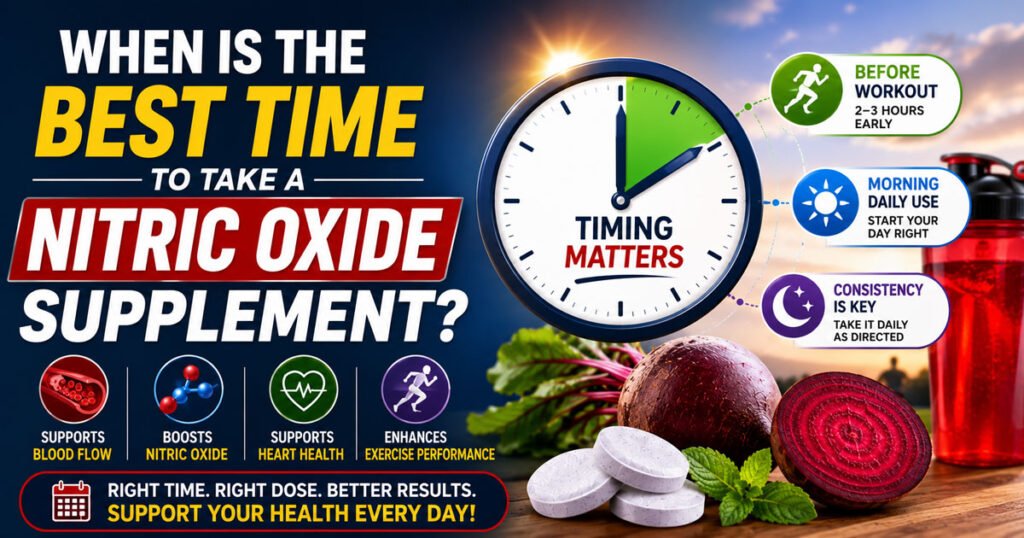
Timing depends on the ingredients and why you are taking the product. In exercise research, dietary nitrate is often consumed several hours before exercise when researchers are investigating an acute performance response.
L-citrulline products may have different timing recommendations depending on the formulation and intended use. For a commercial supplement, the safest approach is to follow the manufacturer’s serving and timing instructions rather than assuming every nitric oxide booster should be taken at the same time.
If you take medications or have a health condition, discuss supplement use with a healthcare professional before changing your routine.
Are Nitric Oxide Boosters Safe?
“Natural” does not automatically mean risk-free. Dietary supplements can cause side effects or interact with medications, depending on their ingredients and your individual health situation.
This is particularly relevant for people taking medications that affect blood pressure, circulation, or cardiovascular function. Combining multiple supplements can also make it harder to identify which ingredient is responsible for an unwanted reaction.
Read the label carefully and follow the recommended serving. If you develop concerning symptoms after taking a supplement, stop using it and seek appropriate medical advice.
Nitric Oxide Booster: What Should You Expect?
A realistic expectation is more useful than a dramatic promise. Some people may notice differences in exercise-related sensations or performance, while others may notice little or nothing.
Research on nitrate and citrulline suggests that individual responses can vary considerably. Factors such as diet, fitness level, exercise type, dosage, timing, and baseline health can influence results.
No nitric oxide booster can guarantee better circulation, greater endurance, or improved sexual performance for every person.
The Bottom Line
A nitric oxide booster is designed to support pathways involved in the body’s natural nitric oxide production. Common ingredients include L-citrulline, L-arginine, beetroot, and dietary nitrate, with some products adding vitamins, minerals, or botanical extracts.
The strongest foundation is still a healthy lifestyle. Eating nitrate-rich vegetables, exercising regularly, avoiding tobacco, getting enough sleep, and supporting cardiovascular health can all contribute to normal nitric oxide biology.
If you decide to use a supplement, compare the ingredient amounts, read the complete label, and keep expectations realistic. A product such as CircO2 may be convenient for people looking for a combination of beetroot and L-citrulline, but it should be evaluated as a supplement rather than a substitute for healthy habits or medical care.
Important Disclaimer
This article is for educational purposes only and is not intended to provide medical advice, diagnosis, or treatment. Dietary supplements are not intended to diagnose, treat, cure, or prevent disease. If you have a medical condition, take prescription medications, are pregnant or breastfeeding, or are considering a nitric oxide supplement, speak with a qualified healthcare professional before making significant changes to your routine.