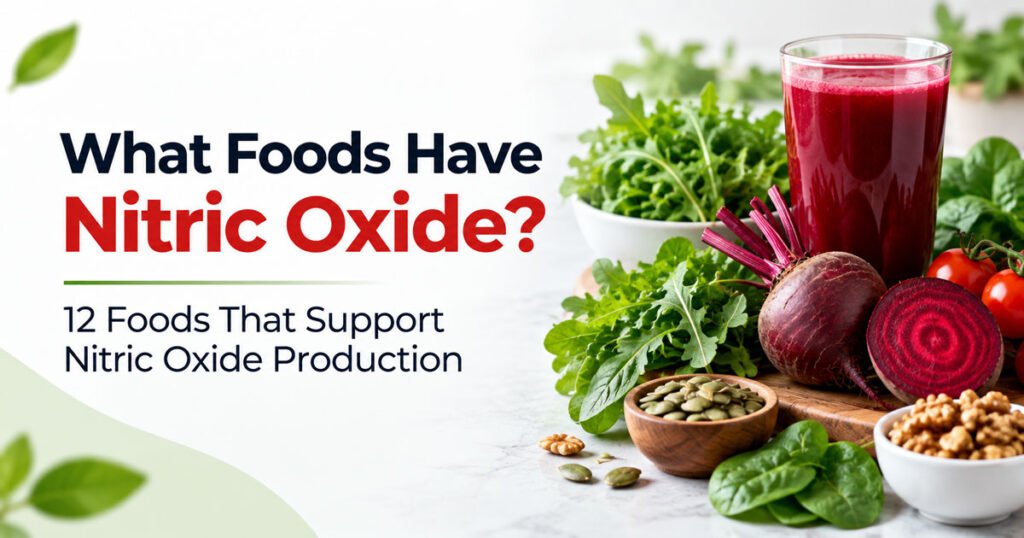

If you want to know how to increase nitric oxide in your body naturally, start with the basics: eat more nitrate-rich vegetables, exercise regularly, and support the systems that help your body produce nitric oxide. You do not necessarily need a supplement to support healthy nitric oxide levels.
Nitric oxide (NO) is a signaling molecule involved in blood-vessel relaxation, circulation, muscle function, and several other normal processes. Your body can produce it through enzymes called nitric oxide synthases, while dietary nitrate provides another pathway that can ultimately contribute to nitric oxide availability.
Why Does Nitric Oxide Matter?
Nitric oxide helps regulate the tone of blood vessels. When blood vessels relax, blood can move through them more easily. NO also participates in communication between cells and has roles in skeletal muscle and energy metabolism.
One interesting aspect is that nitric oxide production is not controlled by a single food or supplement. It depends on several interconnected pathways, including the availability of nitric oxide precursors, physical activity, vascular health, and the nitrate-nitrite pathway involving bacteria in the mouth.
The goal is not to maximize nitric oxide at all times, but to support your body’s normal ability to produce and use it.
1. Eat More Nitrate-Rich Vegetables
One of the simplest dietary strategies is to regularly eat vegetables naturally rich in nitrate. Leafy greens and beetroot are particularly well known for this.
| Food | Why It May Help |
|---|---|
| Arugula | Very nitrate-rich leafy green |
| Spinach | Provides dietary nitrate and other nutrients |
| Beetroot | A concentrated dietary source of nitrate |
| Lettuce | Can contribute nitrate as part of a varied diet |
| Swiss chard | Nitrate-rich leafy vegetable |
| Celery | Contains naturally occurring nitrate |
Dietary nitrate can be converted to nitrite and subsequently contribute to nitric oxide production. Research has particularly focused on leafy vegetables and beetroot because they can increase nitrate and nitrite availability in the body.
2. Add Beetroot to Your Diet
Beetroot deserves special attention because it is one of the most widely studied foods in relation to dietary nitrate. You can eat whole beetroot, add it to salads, blend it into meals, or use beetroot juice.
Research suggests dietary nitrate from beetroot can influence nitric oxide-related pathways and may affect exercise efficiency and performance in certain situations. However, results vary depending on the person, exercise type, dose, and other factors.
Think of beetroot as part of an overall healthy eating pattern rather than a guaranteed nitric oxide booster.
3. Exercise Regularly
Exercise is another practical way to support your body’s nitric oxide system. During physical activity, increased blood flow and mechanical forces acting on blood-vessel walls can stimulate pathways involved in nitric oxide production.
Both aerobic exercise and resistance training can be useful. Walking, cycling, swimming, jogging, strength training, and other activities can all contribute to better cardiovascular fitness when performed consistently.
Recent research continues to examine how exercise training affects both nitric oxide synthase pathways and the nitrate-nitrite-nitric oxide pathway.
4. Protect Your Oral Microbiome
This is one of the more surprising parts of nitric oxide biology. Some of the nitrate you consume is concentrated in saliva, where oral bacteria help convert nitrate into nitrite. The nitrite can then participate in the production of nitric oxide under appropriate conditions.
That means your mouth is involved in the dietary nitrate pathway. Some research has found that practices that substantially reduce oral bacteria can reduce the effects of dietary nitrate on nitric oxide-related metabolism and exercise performance.
This does not mean you should neglect oral hygiene. Instead, maintain good dental care and talk with your dentist or healthcare professional about mouthwash use if you have questions about your specific routine.
5. Include Foods That Provide L-Citrulline and L-Arginine
Your body can produce nitric oxide through the nitric oxide synthase pathway using L-arginine as a substrate. L-citrulline is also relevant because the body can convert it into L-arginine.
Watermelon is a notable food source of L-citrulline, while nuts, seeds, legumes, and other protein-containing foods can provide arginine. Eating a varied diet gives you several nutrients involved in normal cardiovascular and metabolic function.
However, eating one particular food does not guarantee a noticeable increase in nitric oxide. The body’s response depends on digestion, metabolism, overall diet, physical activity, and individual physiology.
6. Choose Foods Rich in Vitamin C and Other Nutrients
A balanced diet supplies many nutrients involved in normal vascular and cellular function. Fruits and vegetables provide vitamin C, polyphenols, potassium, folate, and other compounds that can complement an overall heart-healthy eating pattern.
Good options include citrus fruits, berries, bell peppers, tomatoes, broccoli, kiwi, and many other colorful fruits and vegetables.
Rather than searching for one “magic” nitric oxide food, focus on dietary variety and consistently eating minimally processed foods.
7. Maintain a Healthy Exercise Routine
If your goal is better circulation and exercise performance, consistency matters more than occasional intense workouts. A practical routine can combine moderate aerobic activity with resistance training and adequate recovery.
Dietary nitrate has been studied particularly in relation to exercise performance. Some research has found benefits under specific conditions, while other studies show smaller or inconsistent effects. A large systematic review found that factors such as exercise duration, nitrate source, dose, and oral microbiota can influence outcomes.
For general health, therefore, exercise should be viewed as a long-term habit rather than a quick nitric oxide “hack.”
Can a Nitric Oxide Supplement Help?
Food and lifestyle should come first, but some people also choose a nitric oxide supplement to make certain ingredients easier to consume consistently. Formulas can contain ingredients such as beetroot, L-citrulline, L-arginine, or other compounds associated with nitric oxide pathways.
One option you may come across is CircO2 Nitric Oxide Supplement. Its formula includes beetroot powder and L-citrulline along with vitamin C, vitamin B12, magnesium, and other ingredients. If you are considering it, review the complete Supplement Facts label and follow the manufacturer’s directions.
Interested in an easy way to add nitric oxide-supporting ingredients to your routine? CircO2 is a quick-dissolve nitric oxide supplement formulated with ingredients including beetroot and L-citrulline.
Explore CircO2 & Check the Current Offer
We may earn a commission if you purchase through links on this site, at no additional cost to you.
8. Stay Hydrated
Hydration is easy to overlook when discussing circulation and exercise. Water is essential for maintaining normal blood volume and supporting many physiological processes.
Dehydration can make exercise feel harder and can affect cardiovascular responses to physical activity. While drinking more water is not a direct nitric oxide “booster,” staying adequately hydrated supports the environment in which your cardiovascular system functions normally.
For most people, regular fluid intake throughout the day and additional fluids around exercise are sensible. Individual needs vary with temperature, activity level, body size, and other factors.
9. Limit Lifestyle Factors That Work Against Vascular Health
Supporting nitric oxide is not only about adding foods. It is also about maintaining habits that support healthy blood vessels.
- Stay physically active.
- Eat plenty of vegetables and fruits.
- Do not smoke.
- Maintain a healthy body weight when appropriate.
- Get adequate sleep.
- Manage ongoing stress.
- Keep alcohol intake moderate or avoid it.
- Follow medical advice for existing cardiovascular risk factors.
Improving overall cardiovascular health is likely to be more meaningful than relying on a single nitric oxide strategy.
How Long Does It Take to Increase Nitric Oxide?
There is no single timeline that applies to everyone. Dietary nitrate can affect nitrate and nitrite levels relatively quickly, while the benefits associated with regular exercise and healthier lifestyle habits develop over a longer period.
In exercise research, dietary nitrate is often consumed several hours before activity when an acute performance effect is being studied. A systematic review found that nitrate was particularly effective in certain exercise settings and that timing and dose influenced the results.
That does not mean you should take large amounts of nitrate or supplements without considering your individual circumstances.
A Simple Daily Approach
If you want a practical starting point, keep it uncomplicated. Build meals around vegetables, include nitrate-rich leafy greens regularly, add beetroot when you enjoy it, eat a varied diet, exercise consistently, and stay hydrated.
| Daily Habit | Simple Example |
|---|---|
| Nitrate-rich vegetables | Arugula or spinach with lunch |
| Beetroot | Add beetroot to a meal or smoothie |
| Exercise | Walking, cycling, or strength training |
| Protein foods | Nuts, seeds, beans, or other balanced choices |
| Hydration | Drink fluids regularly throughout the day |
| Overall diet | Choose a variety of minimally processed foods |
The Bottom Line
Learning how to increase nitric oxide in your body naturally does not require an extreme diet or complicated routine. The strongest practical approach is to combine nitrate-rich vegetables, regular physical activity, a varied diet, and healthy lifestyle habits.
Beetroot and leafy greens are particularly interesting because dietary nitrate can enter the nitrate-nitrite-nitric oxide pathway. Exercise also has an important relationship with nitric oxide biology. However, research shows that individual responses can differ, so expectations should remain realistic.
For most people, the best nitric oxide strategy is a consistent healthy lifestyle rather than relying on one food, supplement, or quick fix.
Important Disclaimer
This article is for educational purposes only and is not intended to provide medical advice, diagnosis, or treatment. Dietary supplements are not intended to diagnose, treat, cure, or prevent disease. If you have a medical condition, take prescription medications, are pregnant or breastfeeding, or are considering a nitric oxide supplement, speak with a qualified healthcare professional before making significant changes to your routine.
Sources & Further Reading
- Dietary nitrate and nitric oxide metabolism, including the role of the mouth, circulation, muscle, and exercise.
- Review of dietary nitrate and physical performance.
- Systematic review examining factors that influence the effects of nitrate on exercise performance.
- Review of the role of oral microbiota in dietary nitrate metabolism.