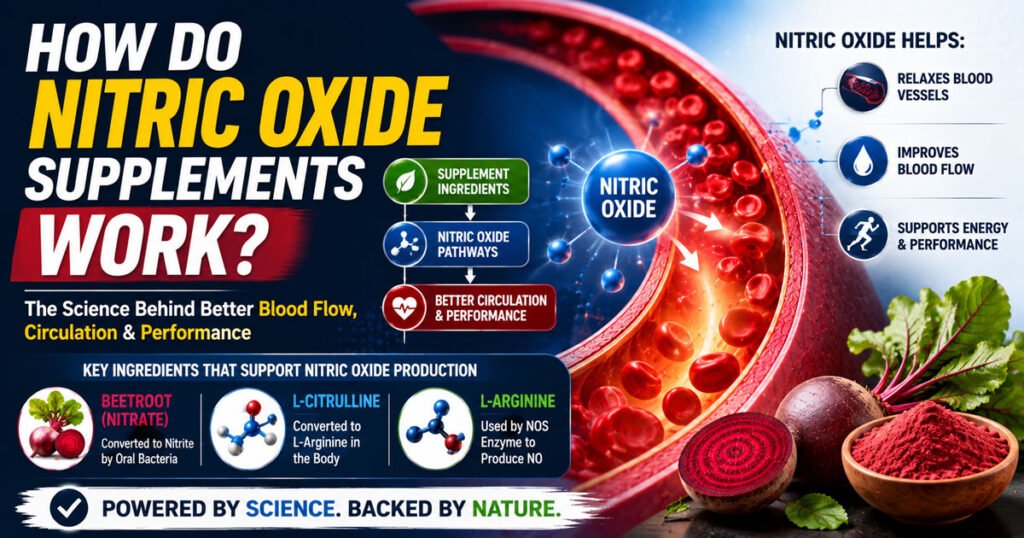
If you’ve ever wondered how nitric oxide supplements work, the answer starts with understanding how your body naturally produces nitric oxide. These supplements don’t usually contain large amounts of nitric oxide itself. Instead, they typically provide ingredients that may support the pathways your body uses to produce or maintain nitric oxide.
Nitric oxide is a signaling molecule involved in several normal processes, including the regulation of blood vessel function. Common ingredients found in nitric oxide supplements include L-citrulline, L-arginine, beetroot-derived nitrate, and certain botanical extracts.
In this guide, we’ll explain the main nitric oxide pathways in simple language, how common supplement ingredients fit into those pathways, and what to consider when choosing a nitric oxide supplement.
What Is Nitric Oxide?
Nitric oxide, commonly abbreviated as NO, is a molecule naturally produced by the body. It acts as a signaling molecule and participates in several physiological processes.
One of its best-known roles involves blood vessels. Nitric oxide can signal the smooth muscle surrounding blood vessels to relax. This helps regulate vascular tone and supports normal blood flow.
Your body can produce nitric oxide through more than one pathway. The two pathways most commonly discussed in nutrition and supplement research are the L-arginine–nitric oxide synthase pathway and the nitrate–nitrite–nitric oxide pathway.
How Does the Body Naturally Produce Nitric Oxide?
The body has its own systems for producing nitric oxide, so you don’t normally need a supplement simply to have nitric oxide in your body.
One important pathway uses an enzyme called nitric oxide synthase, or NOS. This enzyme uses L-arginine to produce nitric oxide and L-citrulline.
A second pathway involves dietary nitrate. Nitrate can be converted into nitrite and then contribute to nitric oxide formation through a series of reactions.
These pathways can complement one another and are influenced by factors such as diet, exercise, age, health status, and individual physiology.
What Is a Nitric Oxide Supplement?
A nitric oxide supplement is a dietary supplement formulated with ingredients intended to support nitric oxide production, availability, or related physiological pathways.
Despite the name, most products don’t simply provide nitric oxide in a bottle or tablet. Nitric oxide is a highly reactive signaling molecule, so supplements generally use precursors or supporting ingredients instead.
Depending on the product, you may find ingredients such as L-citrulline, L-arginine, beetroot powder, dietary nitrate, hawthorn berry, vitamins, or other botanical compounds.
The exact formula matters because different ingredients can work through different mechanisms.
How Do Nitric Oxide Supplements Work?
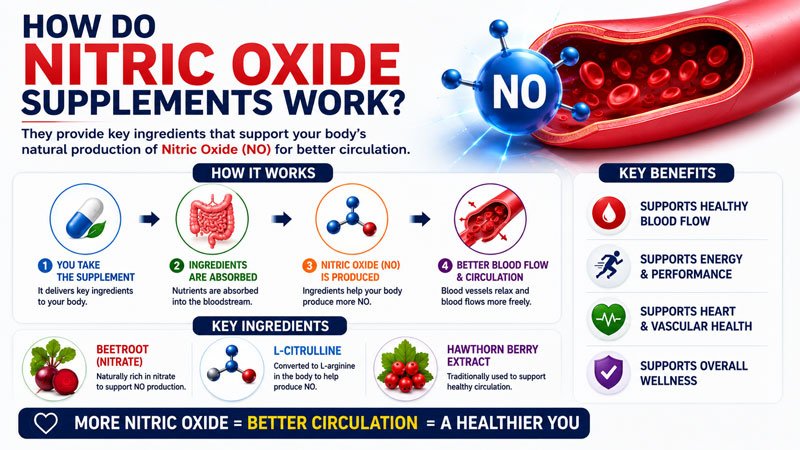
The simplest explanation is that nitric oxide supplements provide nutrients or compounds that can participate in the body’s nitric oxide pathways.
For example, L-arginine is directly involved in nitric oxide synthesis. L-citrulline can be converted into L-arginine, while dietary nitrate from foods such as beetroot can enter the nitrate-nitrite-nitric oxide pathway.
Once nitric oxide is produced, it can act as a signaling molecule and influence vascular smooth muscle.
This is why nitric oxide supplements are often marketed around circulation, blood flow, and exercise-related support.
L-Citrulline and the Nitric Oxide Pathway
L-citrulline is one of the most commonly discussed ingredients in nitric oxide supplements.
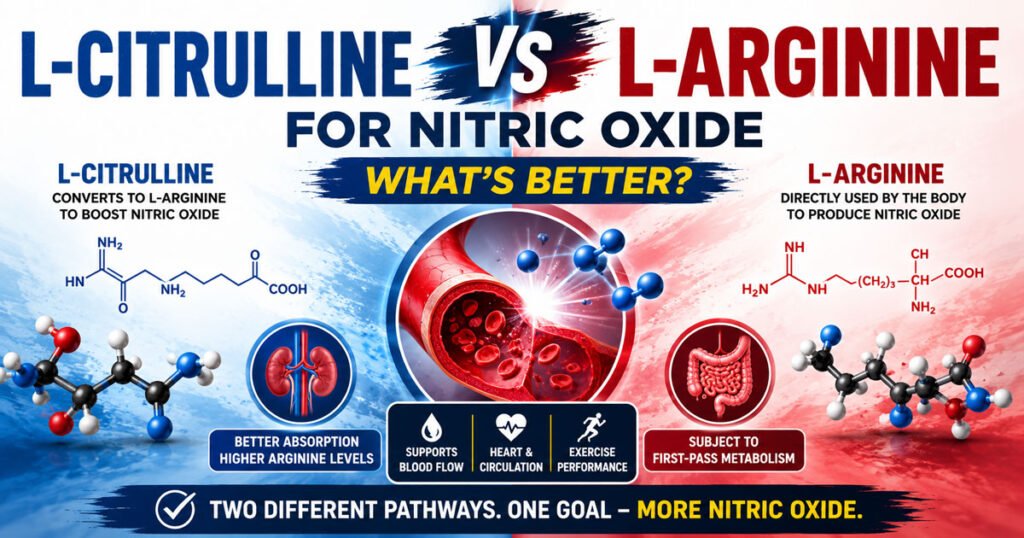
Unlike L-arginine, L-citrulline is not directly converted into nitric oxide by nitric oxide synthase. Instead, the body can convert L-citrulline into L-arginine.
The resulting L-arginine can then participate in nitric oxide production through nitric oxide synthase.
Research has found that oral L-citrulline can increase circulating L-arginine levels efficiently. One reason is that L-citrulline is handled differently from oral L-arginine during digestion and metabolism.
This is why L-citrulline is often included in products designed to support nitric oxide availability.
L-Arginine and Nitric Oxide
L-arginine has a more direct connection with nitric oxide production.
Nitric oxide synthase uses L-arginine as a substrate to produce nitric oxide. This makes L-arginine an important component of the body’s nitric oxide synthase pathway.
However, consuming L-arginine doesn’t mean that all of it will automatically be converted into nitric oxide.
Oral L-arginine is subject to metabolism in the gastrointestinal tract and liver, which can affect how much reaches the wider circulation.
This is one reason researchers have investigated L-citrulline as another approach to increasing arginine availability.
Beetroot and the Nitrate-Nitrite-Nitric Oxide Pathway
Beetroot works through a different pathway.
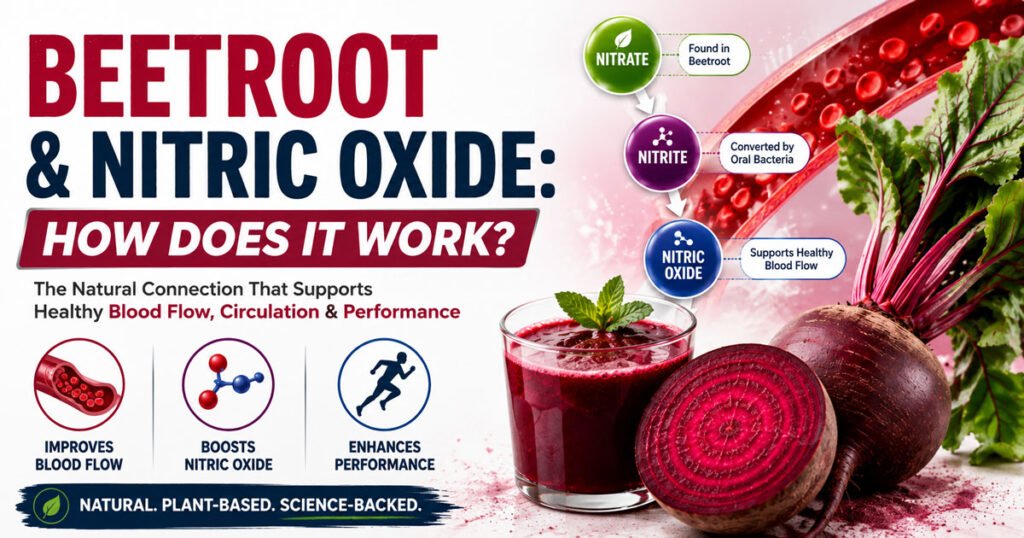
Beetroot naturally contains dietary nitrate. After nitrate is consumed, some of it is absorbed and circulated before being concentrated in saliva.
Specific bacteria in the mouth can convert nitrate into nitrite. After swallowing, nitrite can participate in further reactions that contribute to nitric oxide formation.
This process is commonly called the nitrate-nitrite-nitric oxide pathway.
Research describes this pathway as an alternative or complementary route to the traditional L-arginine–NOS pathway.
Why Oral Bacteria Matter
The connection between nitric oxide supplements and oral bacteria is particularly interesting when a product contains nitrate.
Dietary nitrate doesn’t simply travel directly from your stomach to nitric oxide. Oral bacteria are involved in the first major conversion step, reducing nitrate to nitrite.
Research has shown that the oral microbiome plays an important role in dietary nitrate metabolism.
This is one reason scientists have studied how factors that alter oral bacteria may influence nitrate metabolism and nitric oxide-related pathways.
It doesn’t mean that you should stop normal oral hygiene. Maintaining good oral health remains important.
Where Does Beetroot Fit Into Nitric Oxide Supplements?
Beetroot is popular in nitric oxide supplements because it naturally provides dietary nitrate.
Research has investigated beetroot juice and other nitrate-rich beetroot products in relation to vascular function and exercise performance.
However, the nitrate content of beetroot can vary depending on the variety, growing conditions, preparation, and serving size.
This is one reason some supplements use standardized beetroot extracts or powders to provide a more consistent formulation.
What About Hawthorn Berry?
Hawthorn berry is another botanical ingredient found in some nitric oxide formulas.
It has a long history of traditional use and has also been investigated in cardiovascular and vascular research.
However, evidence for individual botanical ingredients can vary significantly depending on the extract, dosage, preparation, and health outcome being studied.
Therefore, it’s important to evaluate a complete supplement formula rather than assuming that every ingredient will produce the same effect in every person.
How CircO2 Uses Different Nitric Oxide Ingredients
CircO2 from Advanced Bionutritionals is one example of a nitric oxide supplement that combines multiple ingredients associated with nitric oxide pathways.
According to the manufacturer’s current product information, its formula includes beetroot powder, L-citrulline, and hawthorn berry extract within its proprietary nitric oxide blend.
The product is provided as a quick-dissolve tablet designed to dissolve in the mouth.
The manufacturer describes the formula as being designed to support nitric oxide and circulation. As with any dietary supplement, individual responses can vary.
If you’re interested in exploring the formula, you can review the current product information and available packages below.
Affiliate Disclosure: We may earn a commission if you purchase CircO2 through our affiliate link, at no additional cost to you.
How Nitric Oxide Relates to Blood Flow
One reason nitric oxide has received so much attention is its role in blood vessel signaling.
Nitric oxide can signal vascular smooth muscle to relax. This process can influence the diameter and tone of blood vessels and is an important part of normal vascular function.
Because of this biological role, researchers have studied nitric oxide pathways in relation to blood flow, blood pressure, vascular function, and exercise.
However, supporting a normal physiological pathway is different from treating a medical condition. A nitric oxide supplement should not be considered a treatment for cardiovascular disease or other health conditions.
How Nitric Oxide Supplements May Relate to Exercise
Nitric oxide supplements are also popular among people interested in exercise and sports nutrition.
The theory is that nitric oxide-related pathways can influence vascular function and blood flow to working tissues.
Researchers have studied ingredients such as dietary nitrate, beetroot juice, L-citrulline, and L-arginine in different exercise settings.
Results vary depending on the ingredient, dosage, exercise type, fitness level, and study design. Some research has reported improvements in particular exercise outcomes, while other studies have found smaller or inconsistent effects.
Therefore, nitric oxide supplements should not be presented as guaranteed performance enhancers.
What Is the Difference Between a Nitric Oxide Booster and a Supplement?
The terms nitric oxide booster and nitric oxide supplement are often used interchangeably.
In general, a nitric oxide booster refers to a supplement containing ingredients intended to support nitric oxide production or availability.
Some formulas focus primarily on L-citrulline or L-arginine. Others use nitrate-rich ingredients such as beetroot. Multi-ingredient formulas may combine several approaches.
When comparing products, look at the actual ingredients and amounts rather than relying only on the term “nitric oxide booster.”
Does More Nitric Oxide Always Mean Better?
Not necessarily.
Nitric oxide is an important signaling molecule, but biological systems are carefully regulated. More of a particular molecule is not automatically better.
The goal of a dietary supplement should not be to produce unlimited nitric oxide. Instead, products are generally designed to support normal physiological pathways.
This is also why responsible supplement information should avoid promising guaranteed results or suggesting that a supplement can cure or prevent disease.
How Long Do Nitric Oxide Supplements Take to Work?
There isn’t one universal answer because different ingredients have different absorption and metabolism patterns.
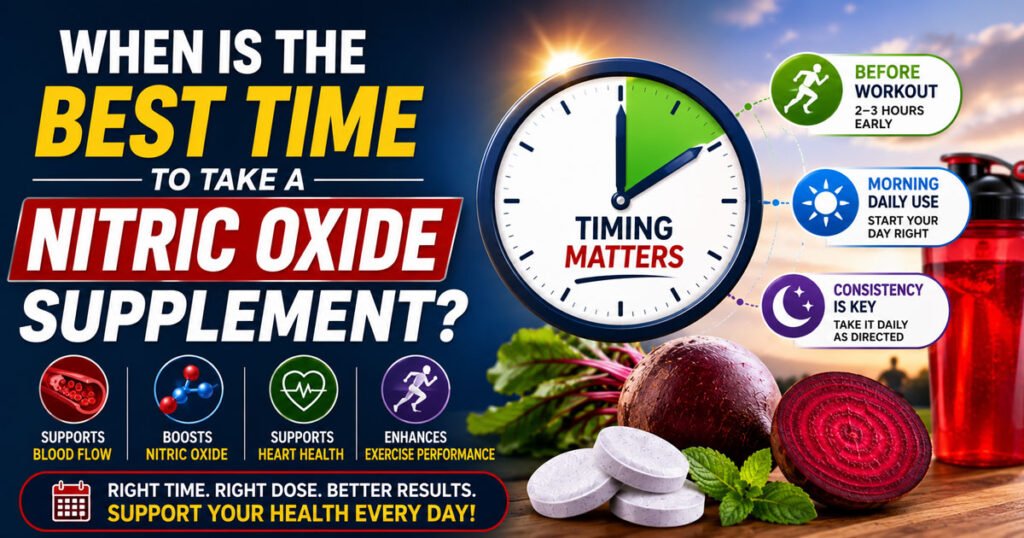
For dietary nitrate, research often examines physiological responses over the hours following consumption. Some studies investigate intake several hours before exercise.
L-citrulline has different pharmacokinetic characteristics, and research has used various timing strategies.
The delivery format can also matter. A powder, capsule, tablet, and quick-dissolving lozenge may have different instructions and intended uses.
For this reason, follow the manufacturer’s directions for the specific product you’re using.
What Should You Look for in a Nitric Oxide Supplement?
If you’re considering a nitric oxide supplement, don’t choose one based only on a bold marketing claim.
- Check the ingredients: Look for clearly identified active ingredients.
- Review serving information: Understand how much of each ingredient is provided.
- Consider the formulation: Different delivery formats may have different instructions.
- Look for evidence: Human research is generally more useful than unsupported marketing claims.
- Read the label: Check warnings, directions, and other ingredients.
- Consider your health: Medication use and existing conditions can affect supplement suitability.
Food Sources vs. Nitric Oxide Supplements
You don’t need a supplement to obtain nitrate-related nutrients.
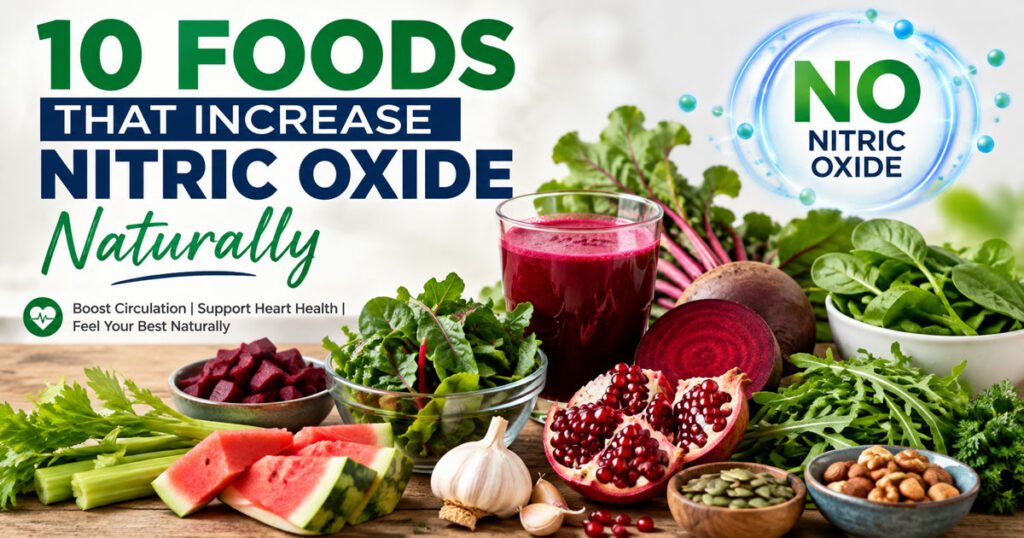
Foods such as beetroot, spinach, arugula, lettuce, celery, and other vegetables can provide dietary nitrate.
A supplement simply offers a more convenient and standardized way of consuming selected ingredients.
A healthy diet should generally remain the foundation of your nutrition. Supplements can be considered an optional addition rather than a replacement for nutritious foods.
Are Nitric Oxide Supplements Safe?
The answer depends on the ingredients, amounts, and individual circumstances.
Some nitric oxide-related ingredients can influence blood pressure or vascular function. They may also interact with certain medications.
If you take prescription medication, particularly medication affecting blood pressure or cardiovascular function, speak with your doctor or pharmacist before using a nitric oxide supplement.
You should also seek professional medical advice if you have an existing medical condition, are pregnant or breastfeeding, have concerns about low blood pressure, or are taking multiple supplements.
Always follow the product label and never exceed the recommended serving unless advised by a qualified healthcare professional.
Frequently Asked Questions
1. How do nitric oxide supplements work?
Most nitric oxide supplements provide ingredients that support one or more nitric oxide pathways. L-arginine can be directly used by nitric oxide synthase, L-citrulline can be converted into L-arginine, and dietary nitrate can participate in the nitrate-nitrite-nitric oxide pathway.
2. What is the best ingredient for nitric oxide?
There isn’t one ingredient that is universally best for everyone. L-citrulline, L-arginine, and dietary nitrate from beetroot are among the most commonly studied ingredients, but research outcomes vary depending on the purpose and individual.
3. Does beetroot increase nitric oxide?
Beetroot provides dietary nitrate, which can participate in the nitrate-nitrite-nitric oxide pathway. Research has investigated beetroot products in relation to nitric oxide availability, vascular function, and exercise.
4. Is L-citrulline better than L-arginine?
L-citrulline can efficiently increase circulating L-arginine because it is handled differently during digestion and metabolism. However, this does not mean it is universally better than L-arginine for every person or every health or exercise outcome.
5. How quickly do nitric oxide supplements work?
The timing varies by ingredient and formulation. Dietary nitrate and L-citrulline have different absorption and metabolic pathways, so there is no single timeframe that applies to every nitric oxide supplement.
6. Can I get nitric oxide naturally?
Your body naturally produces nitric oxide. You can also obtain nutrients involved in nitric oxide pathways from foods such as beetroot and leafy green vegetables.
Final Thoughts
Understanding how nitric oxide supplements work starts with understanding that most products don’t simply supply nitric oxide directly.
Instead, they provide ingredients that can participate in the body’s natural nitric oxide pathways.
L-arginine is directly involved in nitric oxide synthase activity, while L-citrulline can be converted into L-arginine. Beetroot and other nitrate-rich foods use a different pathway involving nitrate, nitrite, oral bacteria, and nitric oxide.
These pathways help explain why ingredients such as beetroot, L-citrulline, and L-arginine are commonly found in nitric oxide supplements.
Research into these ingredients continues, particularly around vascular function and exercise. However, individual responses can vary, and supplements should not be viewed as treatments for medical conditions.
If you’re considering a nitric oxide supplement, look at the complete formula, ingredient amounts, manufacturer’s instructions, and available evidence.
If you’re interested in a multi-ingredient formula containing beetroot and L-citrulline, you can learn more about CircO2 from Advanced Bionutritionals below.
EXPLORE CIRCO2 NITRIC OXIDE SUPPLEMENT →
This article is for general educational purposes only and is not intended to diagnose, treat, cure, or prevent any disease. Always read the product label and consult your doctor or qualified healthcare professional before starting a new dietary supplement, particularly if you take prescription medication or have an existing medical condition.
Sources & Further Reading
- Dietary Supplements for Improving Nitric-Oxide Synthesis — PubMed
- Supplementation with Nitric Oxide Precursors for Strength Performance — PubMed
- L-Citrulline Supplementation: Impact on Cardiometabolic Health — PubMed
- Pathways Linking Oral Bacteria, Nitric Oxide Metabolism, and Health — PMC
- Role of Oral and Gut Microbiota in Dietary Nitrate Metabolism — PMC
- CircO2 Product Information — Advanced Bionutritionals