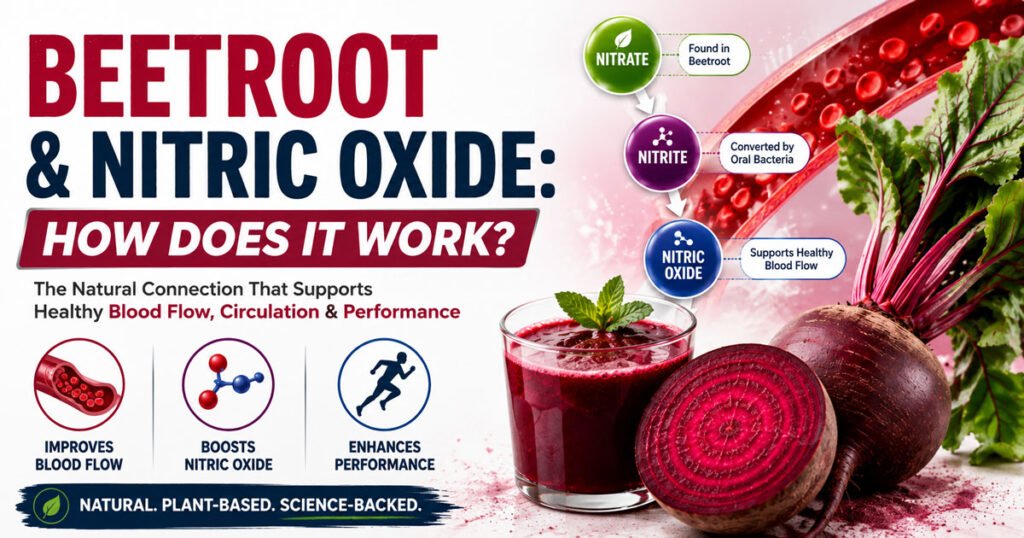
Beetroot and nitric oxide have become popular topics in nutrition, exercise, and wellness research. One reason is that beetroot is naturally rich in dietary nitrate, a compound that can participate in the body’s nitrate-nitrite-nitric oxide pathway.
Unlike foods that contain nitric oxide itself, beetroot provides nitrate that the body can process through several steps. Researchers have studied this pathway in relation to blood vessel function, circulation, and physical performance.
In this guide, we’ll explain how beetroot and nitric oxide are connected, how the nitrate pathway works, what research says about beetroot, and how beetroot fits into the broader world of nitric oxide supplements.
What Is Nitric Oxide?
Nitric oxide, often abbreviated as NO, is a signaling molecule naturally produced by the human body. It is involved in several normal physiological processes, including the regulation of blood vessel function.
One important role of nitric oxide is signaling the smooth muscle surrounding blood vessels to relax. This can help support normal vascular function and blood flow.
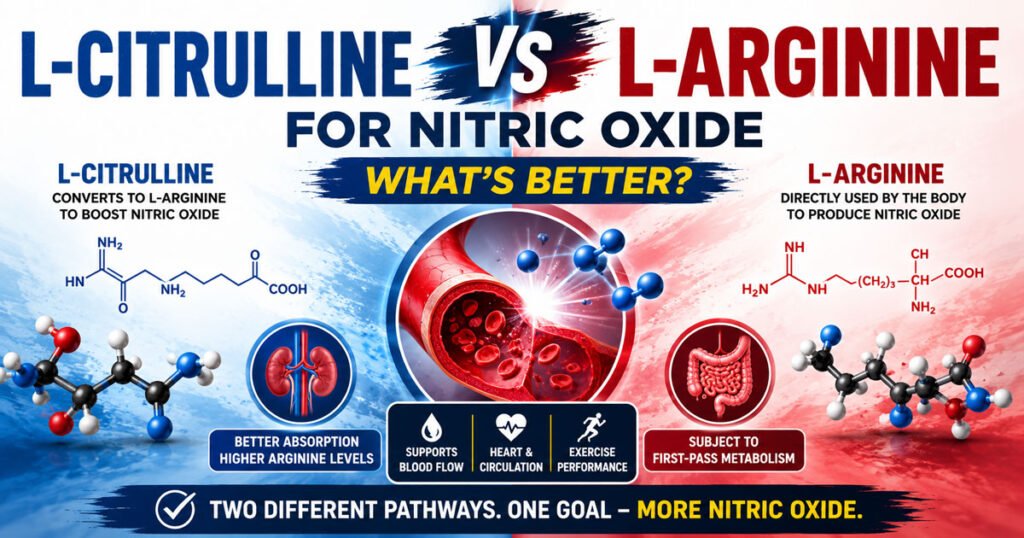
The body can produce nitric oxide through different pathways. One well-known pathway uses the amino acid L-arginine, while another involves dietary nitrate and nitrite.
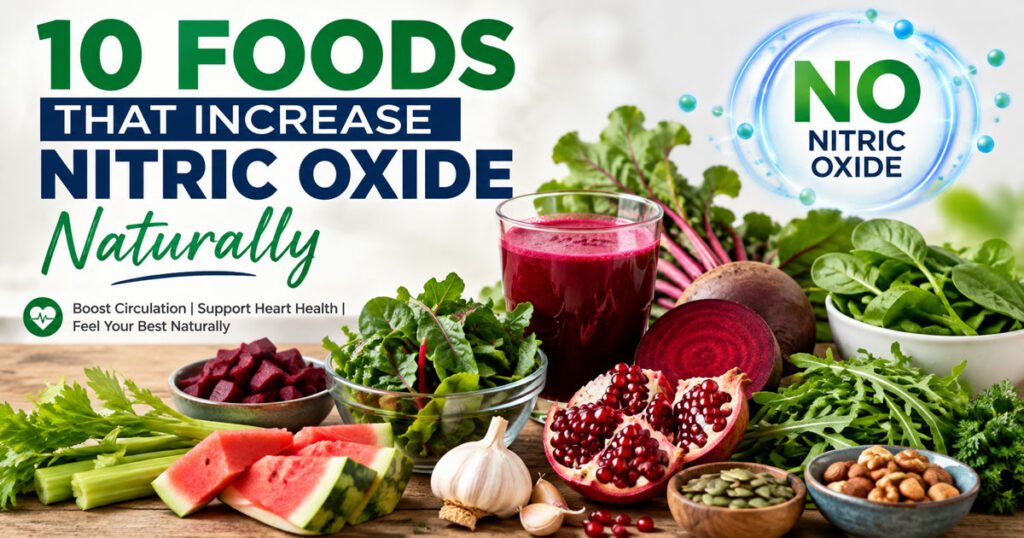
Beetroot is particularly interesting because it naturally contains dietary nitrate, which can participate in the second pathway.
Why Is Beetroot Associated With Nitric Oxide?
Beetroot contains naturally occurring inorganic nitrate. When dietary nitrate is consumed, it can enter the circulation and also be concentrated in saliva.
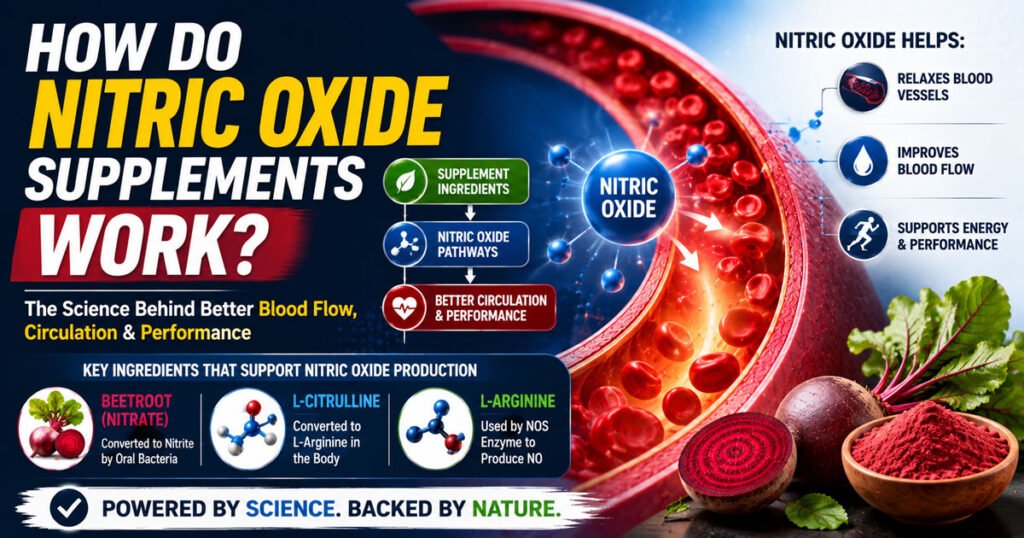
Bacteria in the mouth can help convert nitrate into nitrite. After swallowing, further chemical and enzymatic processes can contribute to the formation of nitric oxide and related nitrogen compounds.
This process is commonly described as the nitrate → nitrite → nitric oxide pathway.
Research has investigated this pathway because it provides an alternative route for nitric oxide production that does not depend entirely on the body’s L-arginine pathway.
How the Beetroot-to-Nitric Oxide Pathway Works
The connection between beetroot and nitric oxide is easier to understand when broken down into a few simple steps.
Step 1: You Consume Beetroot
When you eat beetroot or drink beetroot juice, you consume naturally occurring dietary nitrate.
The amount of nitrate can vary depending on the type of beetroot, growing conditions, processing, storage, and serving size.
Step 2: Nitrate Enters the Body
Dietary nitrate is absorbed and circulated through the body. A portion of circulating nitrate is taken up by the salivary glands and secreted into saliva.
This creates an important connection between dietary nitrate and the bacteria naturally present in the mouth.
Step 3: Oral Bacteria Convert Nitrate to Nitrite
Certain oral bacteria can reduce nitrate to nitrite. This is an important part of the nitrate-nitrite-nitric oxide pathway.
Research has shown that the oral microbiome plays an important role in this process. Practices that substantially disrupt oral bacteria can therefore influence nitrate metabolism.
Step 4: Nitrite Can Contribute to Nitric Oxide Formation
After nitrite is swallowed and enters the digestive system and circulation, it can participate in several reactions that contribute to nitric oxide formation.
This pathway can become particularly relevant in environments where oxygen availability is lower and certain enzymes and proteins can help convert nitrite into nitric oxide.
In simple terms, beetroot provides nitrate, which can be converted to nitrite and eventually contribute to nitric oxide availability.
Does Beetroot Actually Increase Nitric Oxide?
Research supports a relationship between dietary nitrate intake and nitric oxide-related pathways. Beetroot is one of the most commonly studied food sources of dietary nitrate.
Studies have investigated beetroot juice and nitrate-rich diets in relation to vascular function and exercise performance. A systematic review of dietary nitrate research found evidence that nitrate intake can influence vascular function, although the size of the effect can vary between studies and individuals.
Importantly, this does not mean that eating beetroot guarantees a particular increase in nitric oxide or produces the same result for everyone.
Individual responses can depend on factors such as the amount consumed, timing, fitness level, diet, oral microbiome, and other personal characteristics.
Beetroot and Blood Vessel Function
One reason researchers are interested in beetroot nitrate is its relationship with vascular function.
Nitric oxide is involved in signaling processes that help regulate the tone of blood vessels. Because dietary nitrate can contribute to nitric oxide availability, researchers have investigated whether nitrate-rich foods can influence measures of vascular function.
A systematic review examining dietary nitrate and vascular function found that nitrate ingestion appeared to improve some measures of macrovascular function, while effects on microvascular function were more modest.
This is an area of ongoing research, and dietary nitrate should not be considered a treatment for a cardiovascular or circulatory condition.
Beetroot and Exercise Performance
Beetroot has also received considerable attention in sports nutrition.
Researchers have studied beetroot juice and other nitrate sources in athletes and physically active adults to determine whether dietary nitrate can influence exercise performance.
A large systematic review and meta-analysis involving 123 studies found that nitrate supplementation was associated with a small improvement in exercise performance overall. The researchers also found that the response varied depending on factors such as the form of nitrate, supplementation strategy, exercise duration, and other conditions.
More recent research continues to investigate beetroot juice in both aerobic and high-intensity exercise. Some studies report improvements in particular performance measures, while other studies have found little or no meaningful effect for certain types of exercise.
Therefore, beetroot may be useful as part of a sports nutrition strategy for some people, but it should not be viewed as a guaranteed performance enhancer.
Beetroot Juice vs. Whole Beetroot
Beetroot can be consumed in several forms, including whole cooked beetroot, beetroot juice, beetroot powder, and concentrated beetroot products.
These forms can differ significantly in their nitrate content and serving size.
Research studies frequently use beetroot juice because researchers can standardize the amount of nitrate provided to participants. The amount of nitrate in ordinary servings of whole beetroot can be more variable.
This means you should not automatically assume that a serving of whole beetroot provides the same amount of nitrate used in a research study.
Does Cooking Beetroot Reduce Its Benefits?
Food preparation can influence nutrient composition, and nitrate levels may change depending on processing and cooking methods.
However, there is no need to avoid cooked beetroot simply because you are interested in dietary nitrate. Fresh, cooked, and other forms of beetroot can all be part of a balanced diet.
The most practical approach is to include a variety of vegetables rather than focusing on one specific preparation method.
What About Beetroot and Exercise Timing?
Timing has been investigated in studies of dietary nitrate and exercise performance.
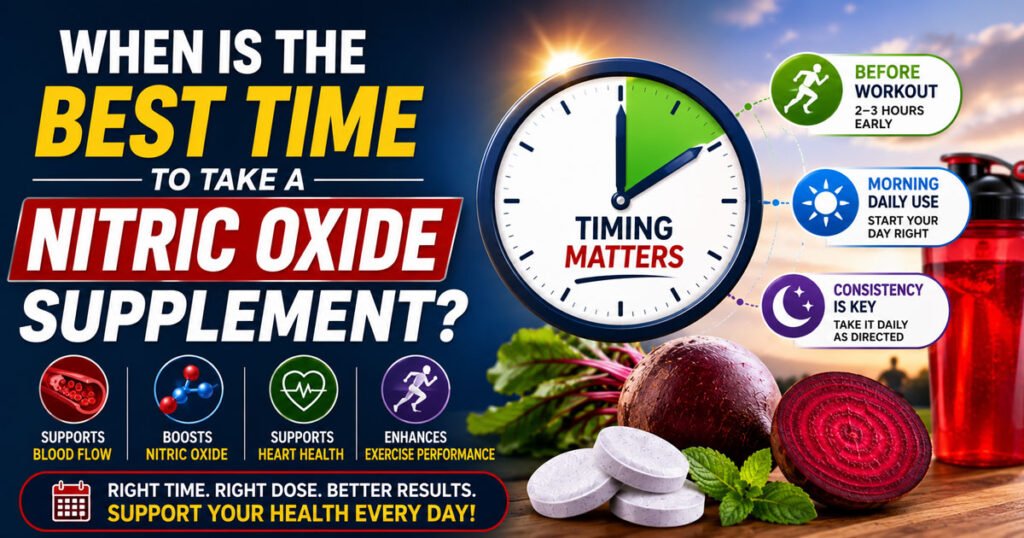
Research suggests that the effects of acute nitrate supplementation may depend on when it is consumed before exercise. One systematic review found that acute nitrate intake was most effective in studies where it was consumed at least several hours before exercise.
However, these findings come primarily from controlled research settings and should not automatically be applied to every beetroot product or every individual.
If you are using a beetroot product specifically for exercise, follow the manufacturer’s instructions and consider discussing supplement use with a qualified healthcare professional.
Can Beetroot Replace a Nitric Oxide Supplement?
Beetroot can be an excellent addition to a balanced diet, but food and dietary supplements serve different purposes.
Eating beetroot provides dietary nitrate along with other naturally occurring nutrients and plant compounds. A nitric oxide supplement, on the other hand, may combine several ingredients associated with nitric oxide pathways into a convenient serving.
There is no requirement to choose one or the other. For many people, a varied diet can remain the foundation while supplements are considered as an optional addition.
Beetroot in CircO2 Nitric Oxide Supplement
Beetroot is also one of the ingredients included in CircO2, a nitric oxide supplement from Advanced Bionutritionals.
The manufacturer’s current product information lists beetroot powder along with L-citrulline and hawthorn berry extract in its proprietary nitric oxide blend. CircO2 is provided as a quick-dissolve lozenge.
The product is marketed as a way to support healthy nitric oxide production and circulation. However, individual experiences with dietary supplements can vary.
If you’re interested in exploring CircO2, you can review the formula, package options, current pricing, and manufacturer’s guarantee through the official offer.
Affiliate Disclosure: We may earn a commission if you purchase CircO2 through our affiliate link, at no additional cost to you.
What Can Affect the Nitrate-to-Nitric Oxide Pathway?
The nitrate pathway is more complicated than simply eating a nitrate-rich food.
One important factor is the oral microbiome. Certain bacteria in the mouth help convert nitrate to nitrite, making oral bacteria an important part of the process.
Research has found that practices that significantly disrupt oral bacteria can reduce some of the effects associated with dietary nitrate.
Other factors, including diet, exercise, individual physiology, nitrate dose, and the timing of intake, can also influence how a person responds.
Is Beetroot Safe for Everyone?
Beetroot is a common food and can generally be included as part of a balanced diet. However, concentrated beetroot products and dietary nitrate supplements can provide amounts that differ substantially from normal food servings.
People with medical conditions or those taking prescription medications should speak with a healthcare professional before using concentrated dietary supplements.
If you have concerns about blood pressure, kidney health, medication interactions, pregnancy, breastfeeding, or any other medical issue, seek professional advice before starting a new supplement.
Beetroot can also temporarily turn urine or stools pink or red. This harmless effect is commonly known as beeturia, although any unusual or concerning symptoms should be discussed with a healthcare professional.
Frequently Asked Questions
1. Does beetroot increase nitric oxide?
Beetroot is naturally rich in dietary nitrate. Nitrate can be converted to nitrite and subsequently contribute to nitric oxide formation through the body’s nitrate-nitrite-nitric oxide pathway.
2. How does beetroot help nitric oxide production?
Beetroot provides dietary nitrate. Oral bacteria can convert nitrate into nitrite, which can then participate in processes that contribute to nitric oxide formation.
3. Is beetroot juice better than eating beetroot?
Not necessarily. Beetroot juice is commonly used in research because its nitrate content can be standardized more easily. Whole beetroot provides additional nutrients and can also contribute dietary nitrate.
4. How long does beetroot take to affect nitric oxide?
The timing can vary depending on the amount and form of nitrate consumed. Research on nitrate supplementation commonly evaluates effects several hours after intake, but individual responses can differ.
5. Can I take beetroot with a nitric oxide supplement?
Whether combining beetroot with a nitric oxide supplement is appropriate depends on the specific product, ingredients, dosage, medications, and individual health circumstances. Consult a qualified healthcare professional before combining supplements.
6. Is beetroot a natural nitric oxide booster?
Beetroot can be described as a natural dietary source of nitrate that participates in a pathway associated with nitric oxide availability. It does not directly provide large amounts of nitric oxide itself.
Final Thoughts
The connection between beetroot and nitric oxide comes primarily from beetroot’s naturally occurring dietary nitrate.
After consumption, nitrate can participate in the nitrate-nitrite-nitric oxide pathway, with oral bacteria playing an important role in the first conversion step.
Research has explored dietary nitrate and beetroot in relation to vascular function and exercise performance. Some studies and systematic reviews have reported beneficial effects in specific situations, while other research has found smaller or inconsistent effects.
For this reason, beetroot is best viewed as one nutritious component of a balanced diet rather than a guaranteed solution for circulation, exercise performance, or any medical condition.
If you’re looking for a convenient way to explore a combination of ingredients associated with nitric oxide pathways, you can also learn more about CircO2 Nitric Oxide Supplement from Advanced Bionutritionals.
EXPLORE CIRCO2 NITRIC OXIDE SUPPLEMENT →
This article is provided for general educational purposes only and is not intended to diagnose, treat, cure, or prevent any disease. Always read the product label and consult your doctor or qualified healthcare professional before starting a new dietary supplement, especially if you take prescription medication or have an existing medical condition.
Sources & Further Reading
- Factors That Moderate the Effect of Nitrate Ingestion on Exercise Performance — PubMed
- Dietary Nitrate from Beetroot Juice and the Nitrate-Nitrite-Nitric Oxide Pathway — PMC
- The Effect of Dietary Nitrate on Macro- and Microvascular Function — PubMed
- Dietary Nitrate Supplementation and High-Intensity Exercise — PubMed
- CircO2 Product Information — Advanced Bionutritionals